READING ACTIVITIES I
Teaching The Basic Code
Establishing The Alphabetic Principle
The information and reading activities on this page are designed for young children just learning to read or older children who are struggling with learning to read.<br>
This page deals with basic code, the forty-two sounds in the English language and their most probable spellings. As mentioned on the Teaching Reading page, by basic code we mean when the letters of the alphabet are used individually to represent the sounds in a word. All letters and sounds have a one-to-one sound correspondence.
Kids need to learn the basic alphabetic code first before moving on to the more difficult advanced code.
The following words contain only basic code: run, hat, stop, dog, milk, lost
In comparison, these words contain advanced code: boat, cow, great, shop
Teaching children to develop good decoding skills through reading activities using basic code words will establish the alphabetic principle and lay a foundation for decoding more difficult texts in the future.
By practicing the basic code we help children accomplish some critical learning objectives essential to establishing reading fluency. Children learn:
- Words are made up of sounds.
- Letters represent those sounds.
- Written words are made up of letters that represent sounds.
- The correspondence between all the sounds and letters that make up the basic code.
- Words are written from left to right.
If we expect children to properly decode more difficult words containing
advanced code and multiple syllables then it simply makes sense to
teach them the basic code first.
You wouldn't enroll your child in algebra class prior to teaching them math facts would you? This answer is obvious yet just about any book used to teach reading in our kindergarten and first grade classrooms is filled with advanced code and multisyllabic words. Teachers, look at your earliest guided reading books and you will see exactly what we mean.
When children read these books without being taught good decoding skills they are forced to rely on their memories, picture cues, repetitive text, wild guesses and other poor reading behaviors to gain fluency. Eventually, these supports and reading strategies in the absence of good code knowledge fail them.
Pictures eventually disappear from books.
Repetitive text does the same.
And as children have to memorize more words than humanly possible to sustain fluency...Memories begin to fail.
This sequence all occurs by the end of first grade!
So what is left to support reading fluency without good reading decoding skills? You got it! Guessing.
Katie and I both agree that if we had to describe the reading behaviors of dyslexic or struggling readers in just one word we would say GUESSERS!
Children who have been taught to rely too heavily on reading strategies inconsistent with the nature of our written code eventually turn into guessers. Their reading is slow, inaccurate and labored. Fluency is poor and any chance of comprehension is gone as well.
While picture cues, repetitive text and memory all have their appropriate places in reading they are NO replacements for learning the code and proper word attack strategies. Too often the teaching of these non-essential reading skills receive more time and emphasis than they should. We must explicitly incorporate reading activities into our teaching to ensure children are developing the reading decoding skills needed to support their later literacy development.
After all, what does decoding mean? “To break a code!”
When teaching young children first learning to read (between ages 5 and 6) the goals are clear. You want your child to:
- Know the basic code perfectly.
- Be able to read any Consonant-Vowel-Consonant (CVC) word.
- Begin reading and spelling more difficult basic code words such as CCVC and CVCC words.
The first step in learning to read is to understand the nature of our written code. There are symbols (which we call letters) that represent sounds. Each time we see one of the symbols we are supposed to say the sound that it represents. As we make our way through the word we get to the end and have meaning.
Many children fail to understand this nature. They think letters make sounds instead of standing for them or they pay more attention to the names of letters than the sounds they represent and are forever confused trying to use the names of letters to decode words.
I recently assessed a first grade student who read the word ‘but’ as:
“Bee-You-Tee”..."Beauty!" He was so proud of himself but it was painfully clear he did not understand the nature of our written code.
Incorporating the following reading activities into your teaching strategies or reading activities at home will bring the written code to life and allow your children to develop the reading decoding skills needed to support their literacy development.
Reading Activities (Basic Code)
Environmental Print
Labels Homework
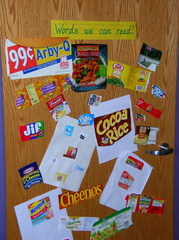
Many children begin the school year by saying, "I can't read!" They think reading is being able to read a chapter book. Helping children understand that environmental print IS reading gives them confidence as they are learning letter sounds and putting those sounds together to make words!
Ideas For The Classroom
Sound Scavenger Hunt
Working with a partner, have children find objects at school (or home) that begin with a particular sound. Cross off the letter and write the name of the object next to the letter. This is a great reading activity to see if children can not only find words with a certain sound, but write the sounds they hear in words!
What Words Start Like Your Name?
Have children write down as many things that begin like the first sound in their name. (Try this on the first day of school and share it with your students on the last day of school. They are always surprised by how many words they "weren't able to write" on the first day of school!
Word Wall Flashlight Song
During the first few weeks of school, CVC and CVCC words are added to the Word Wall. Using a flashlight, turn off all of the lights, sing the song, and shine the flashlight on a word. Have a child say the sounds in that word and put them together to "read" the word. Repeat this song and shine on another word to be read! Our first grader students love interactive reading activities like this.
"Who Has" CVC Game
Help children learn how to say the sounds in words with this fun reading activity that uses the top 30 CVC words from Fry's Word List. Print, laminate, and cut out the cards. Each child in the classroom receives a card. The person with the "Go" sign will read out loud, "Who has the word..." to the class. The other child who has that card will say, "I have the word.." and the playing continues until the "Stop" sign is found.
CVC/CVCC Word Cards
Help children learn to read CVC and CVCC words by playing this fun reading activity! Print the game board and directions and glue on a file folder. (Directions are attached).
CVC Activity
Have your children read each word and draw pictures to match the words. Each CVC reading activity page is sorted by medial sound.
Quiz, Quiz, Pass
Using Avery 8163 labels, print the following template and stick labels on blank index cards. Place words on one side and the corresponding picture on the other side. Give each child a card and tell them not to let anyone see the backside of the card (the picture). They will find a buddy and have them try to read the word. Check the answer on the back of the card. Then it's the other person's turn to share their word. Once each person has "quizzed" their buddy, they switch cards and move around the room to find a new buddy. Words printed in black are CVC words, red words are CVCC, and blue words are CCVC. Great reading activity for whole group instruction!
CVC Game
CVCC Game
CCVC Game
Place cut-out cards in a basket and have students take turns practice reading common CVC words. If students pull out a "flower" and read the word correctly, they get to keep the word. When students pull out the "sun" they get another turn and when a "rain cloud" is pulled out, they must put all of their cards back into the basket. The student with the most cards at the end is the winner. It is a good idea to print on card stock and laminate before using! When your students master CVC words, add in CVCC words and CCVC words...Or just keep them as three separate games!
CVC Game Revised
We've created a revised edition of our CVC Flower Game. Directions included, use this reading game to practice common CVC words. Great reading activity for K and 1st grade students!
Basic Code Sentences
Laminate and cut out the above template for basic code sentences organized by short vowel sounds that contain high frequency words.
Roll and Record Basic Code Sentences Homework
Practice simple sentence reading and math skills with this reading activity for homework use. One of our easiest reading activities. (Directions included).
CVC, CVCC, & CCVC Word List by Medial Sound
Use list of CVC, CVCC, and CCVC words for the following reading activities and reading strategies:
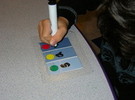
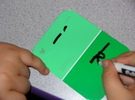
By collecting (and laminating) paint samples from your local hardware store and dry-erase markers, you can provide children with a fun reading activity to write (and say) the sounds they hear in words. Begin by using a "one-color" sample to make sure they have mastered letter sounds in isolation. Use a "two-color" sample when your child is able to blend two phonemes together. It's a good idea for children to work from the lightest color to the darkest color. (For children who are having difficulty working left to right; place a green, yellow, and red sticker at the top).
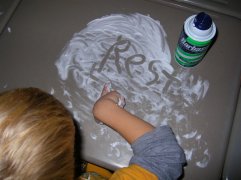
Shaving Cream
Try a tactile way of helping children write the sounds they hear by using shaving cream on their desks. <i>When it comes time for clean up, have students scrap off as much shaving cream as possible. Rub the remaining cream into the desk until it disappears. Wipe desks down with a Clorox Wipe. DO NOT use water to clean the desks!
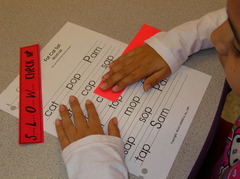
Slow Check Template
Some children have difficulty tracking print when they are beginning to look at words. Cover up the word with the "Slow Check" and move slowly to the right, while saying each sound. Blend the sounds to read the word.
Basic Code Slow Check Words
Print and cut out the basic codes words. Have students place "Slow Check" (from above) over the letters. As the Slow Check is pulled slowly from left to right, the students say the sounds and blend them together to say the word. Child can check themselves by using the pictures at the end of the word. We use the slow check as soon as we start reading activities with basic code words and once our students have the idea we teach them to scan left to right with their eyes only and put the slow checker away!
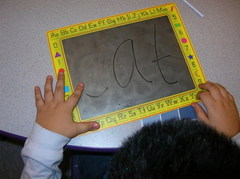
Imaginetics has a great alternative to the typical dry erase boards. Using a magnet to write and your finger to erase, students are able to write the sounds they hear in a given word. It's a great idea to have students say the sounds again when they are erasing the letters. Reading activities like this are great for children with fine motor control or hand writing issues.
Short Vowel A, E, & I Template
Short Vowel O & U Template
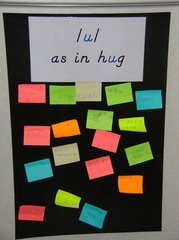
Using the above templates, cut and glue each short vowel card on a poster. Have students in your classroom write words that contain that sound on small Post-Its. Add to the posters throughout the school year.
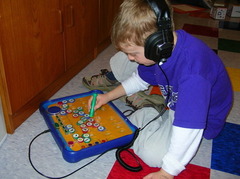
Neurosmith has many great interactive boards that students can use to manipulate letter sounds. This one in particular allows children to segment, blend, delete, and add sounds in real and non-sense words. Go to www.smallworldtoys.com to find more of their electronic learning toys. Perfect reading activities for classroom centers or at home!
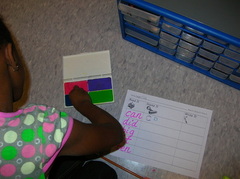
Read It, Stamp It, Write It
Write simple CVC, CVCC, or CCVC words (depending upon the ability of your students) in the left column. By providing them with letter stamps, children can stamp the word and write it. This is another great reading activity for classroom centers.
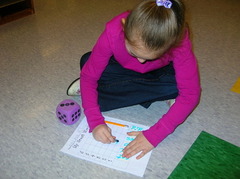
My Great Word Race (With 1 Die)
My Great Word Race (With 2 Dice)
Write simple CVC, CVCC, or CCVC words (depending upon the ability of your students) in the left column. Have your child roll a dice and say the sounds that corresponds with that number. If they are able to read the word successfully have them color a square on the graph. Try to see which word can win the race. For a math challenge, use two dice and have your child add the numbers together to determine which word to read. One of our students favorite reading activities during word work centers.
Nonsense Words
Although there is much hesitation amongst some educators as to whether or not having children work with nonsense words is appropriate; the goal of using nonsense words during reading activities is to determine if kids have mastered the alphabetic principle (letters represent sounds in words and these letter sounds can be blended together to make new words). Reading activities working with nonsense words in place of common CVC words that children might already have learned/memorized, like “cat,” “sit,” and “dad” can help you to determine their understanding of alphabetic principle and decoding skill efficiency. Think about it this way...any word a child does not recognize is at first a nonsense word to them. The key is to observe the reading behaviors used when children read these unfamiliar words and ensure they are using preferred reading decoding strategies over poor ones.
Free Nonsense Word Flash Cards
SPECIAL NOTE: Please do not use these flash cards as a "drill and kill" reading activity in a sole attempt to improve DIBELS Nonsense Word Fluency scores. This is not their intended use and we would never recommend using them this way.
Alien Words
Non-Sense Word List
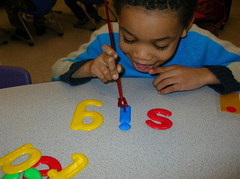
By using tactile letters, students can create, say, and blend the sounds in words, making sure they are reading from left to right. You can tell your child to substitute a sound for a different one. For example, "take out the /i/ and put in an /o/. What's your new word. The nonsense word list and letter can be used to create all types of reading activities.
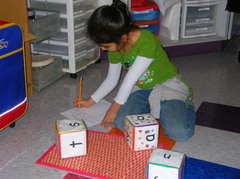
Roll-A-Word
Using letter cubes (and making sure one cube contains only vowels) children can "roll" to make new words. Once they have rolled three times, children determine whether or not they have created a real word (or non-sense word).
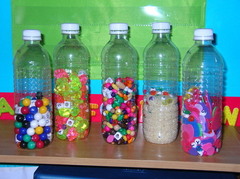
Message in a Bottle
This activity works the same as "Roll-A-Word" only using water bottles filled with letters and other various objects. The second bottle that is used must contain only short vowels. Once three letters are found, students determine whether or not they have created a real word (or non-sense word).


)

