phonemic awareness activities
Phonological awareness & Phonemic awareness activities
Phonological Awareness Activities Packet (Aligned to Common Core)
It has taken a while but we have finally completed our Phonological Awareness Activities Packet. This packet has been a huge undertaking but we wanted to accomplish a few things with it:
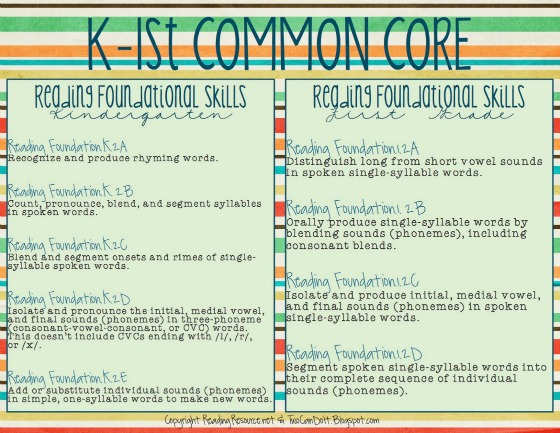
- Align the phonemic awareness activities on this page below with the Common Core Standards.
- Create new phonemic awareness activities for the standards we did not have existing activities for.
- Put all the activities in one download!
What we ended up with is a 58 page Phonological Awareness Activities Download.
The file was so large that we could not upload it to our Download Central Page so we placed it in Katie's TpT Store. Here are some sample pics for you. Click any pic to enlarge.
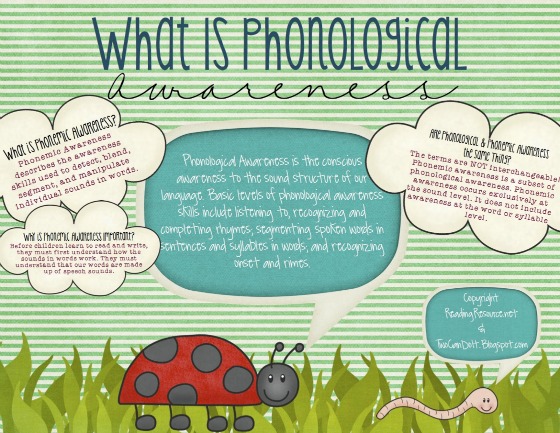
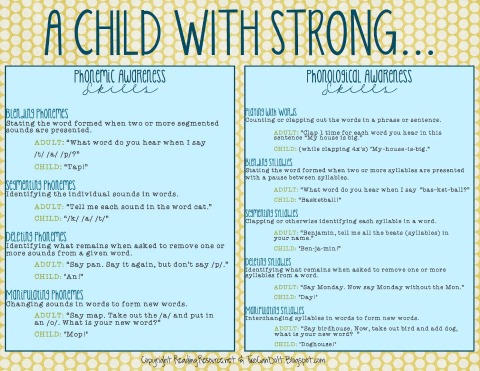
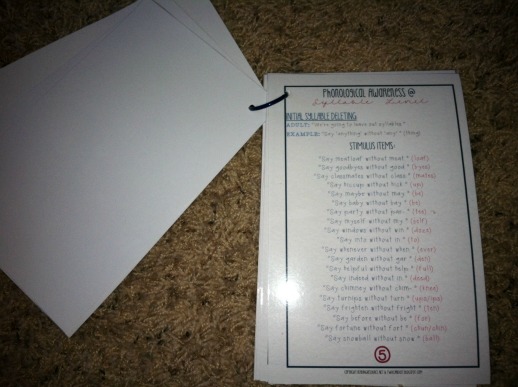
This is our favorite part about the new download! You'll get a 30-page
phonological awareness progression for ways to help your students at the
word, syllable, and sound level. Simply cut the page down the middle,
punch a whole in the corner, and bind with a metal ring! It's perfect to
do with your students when you have a few free minutes...and it's super
handy. Click to enlarge the pics.
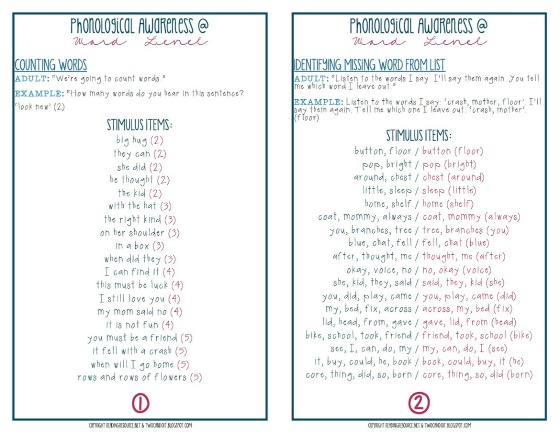
Head on over to Katie's TpT Store to purchase this packet for just $3 or keep scrolling down for all of our FREE phonemic awareness activities.
Phonological Awareness Checklist
Want an easy and effective way to track multiple students' phonological awareness skills? Print off this template! List the names of students in the left hand column and place check marks under the skills when a child has mastered them!
Syllable: Phonemic Awareness Activities
Tapping Syllables
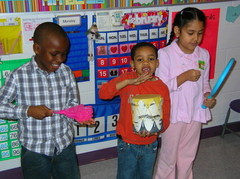
Using different items such as hand clappers, drums, or tennis rackets you can have children determine the number of syllables in a given word. For example, you would tap a drum two times for the word "sister" because it has two syllables. For increased difficulty, tap the drum (any number of times) and have your child think of a word that contains that same number of syllables.
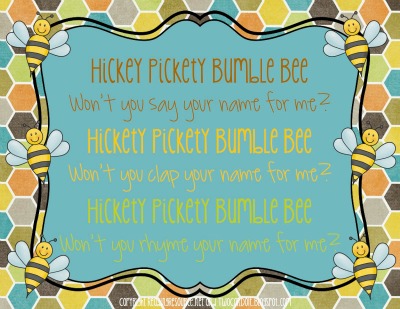
Hickey-Pickety
Using the lyrics to "Hickety Pickety," have your child say, clap the syllables, and whisper their name to you.
Our Syllable Tally
Write the names of students in your classroom or members of your family. Have you child color a smiley face for each syllable in a given name and make a tally mark for each syllable.
Classroom Syllable Graph
Copy a "Classroom Syllable Graph" for each student in your classroom. Say the name of a student and have them color a square above the correct number of syllables. A fun way to combine phonemic awareness activities and math practice!
Home Syllable Search
Help your child find items in different rooms in your home. Sort them by syllables. Write words (or draw pictures) for each object.
Beginning & Ending Sounds: Phonemic Awareness Activities
Twinkle, Twinkle, Little Word
Tell your child you are going to teach them a song that will help them discover new words by taking off parts (sounds) of the word. Teach this song and let them fill in the last word. After a few verses using new words, invite the children to sing along. Other possible words to use include:
- Beginning Sounds: boat (oat), farm (arm), meat (eat), bus (us), sled (lead), hand (and), & sit (it).
- Ending Sounds: hammer (ham), soap (so), little (lit), meat (me), & boat (bow).
Segmenting & blending: phonemic awareness activities
Sound Boxes
Use these sound boxes to help children segment sounds in words. Simply print, laminate, and cut in half each card. Place one game chip under each box. Students say the name of each picture and then push up a chip for each sound in that word. Great for small group instruction!
Head, Shoulders, Knees, and Toes
Give students a word with 1-4 phonemes (sounds). Have them stand up and touch their head, shoulders, knees, and toes as they are saying the sounds in words. For example, the word "cat" would be /c/ (head), /a/ (shoulders), and /t/ (knees). A great active, phonemic awareness activity for helping students with segmenting!
I'm Thinking of a Word
Tell your child that you are going to teach them a song that will help them hear all of the sounds in a word. Teach this song and let them blend the sounds together to make a word. Sing the song a couple times, substituting a new word each time. Scroll down on this page to open a list of words with 4-6 phonemes (sounds) for ideas!
Segmenting Cards (2-5 Phonemes)
Place the cards face-up in random order on a flat surface. Have your child put the pictures together. Say a sound for each picture part while slowly sliding the parts away from each other. Then have your child say a sound for each picture part while slowly sliding the parts together. Once they are back together, say the whole word and continue with other picture cards
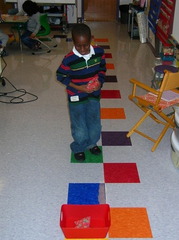
Bean Bag Sound Toss
Using the above template, write words with 1-5 sounds in the left-hand column. Have students count how many sounds they hear in each word and write that number in the middle column. Give your child 5 bean bags and place a basket in front of them (distance depends on their ability to throw). Children throw a bean bag for each sound they hear in a given word. A point is received for each bean bag that makes it into the basket. (Make sure your child is saying the sounds they hear as they throw the bean bag). When they are finished throwing, have them count up their points to determine the grand total.
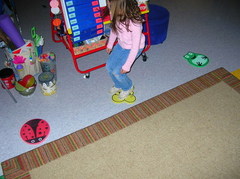
Phoneme Jumping
Place a green, yellow, and red mat on the floor (in that order). Begin by giving your child a word with 1-3 sounds. Have your child say the sounds they hear as they jump from mat to mat. For increased difficulty, move the mats so they are further apart.
Count the Sounds
This template can be used similar to those of Elkonin boxes for segmenting words into sounds. Give your child a word with 1-5 sounds and have them move a token into a box for each phoneme. It's a good idea to use different colored tokens and make sure your child is moving from left to right, just as if they were reading a word.
Graphing Sounds
Have your child look at each picture and determine the number of sounds in that word. Color a box for each sound.
List of Words with 4-6 Phonemes (Sounds)
Here you will find a list of short and long vowel words with 4-6 phonemes (sounds). Before you use this list with your child/class, make sure they have mastered segmenting 1-3 phoneme words. These words can be used with the following phonemic awareness activities for segmenting:
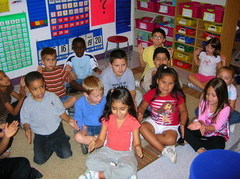
Segmenting
This segmenting activity is easy to do and it doesn't require any materials but your hands! Have your child/class place their hands together. Give them a word. Each time they hear a sound in a word, have them say it and move their hands further apart.
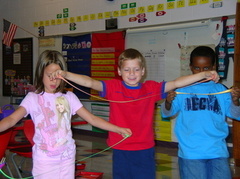
Silly Putty
This is the same concept as the segmenting activity above, only using silly putty to stretch the sounds in words. Using the silly putty helps children to visualize words that have a few sounds and words that have many sounds. (Children really get excited when they find words with many sounds, causing the silly putty to break apart).
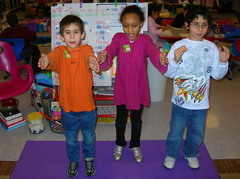
Stretching Mat
This way of stretching words is great for students who like movement! Use a yoga mat and begin by explaining that it's important to stretch your body before you can stretch your brain. Give your child a set of directions to stretch their body. For example, tell them to slowly touch their toes, reach high in the air, place arms out to the side, and roll their head slowly. Once they have stretched their bodies, they are ready to stretch words! A fantastic multi-sensory phonemic awareness activity.
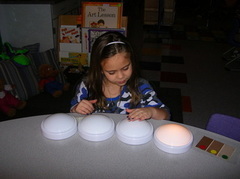
Night Lights
Using inexpensive night lights is a great way to help children learn to say sounds in words. Line up the night lights and say a word. Have your child say the sounds in the word as they turn the lights on. Repeat this process with the same word, but have your child say the sounds while they turn off the night lights. (It's always a good idea to teach your child to work from left to right! This typically is best to do in the small group setting when working on 1-4 phoneme words).
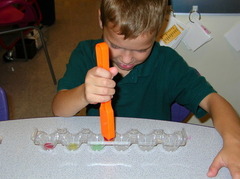
Bingo Chip Segmenting
Using magnetic bingo chips and a cut-apart egg carton, place a chip in each slot. Give your child a word with 1-6 phonemes and have them pick up a chip while they say each sound. Like in the previous activity, it's best to teach your child to work from left to right.
Rhyming: Phonemic Awareness activities
Rhyme Time Bingo
Check out our new rhyming bingo game to play with children in the small group setting or at literacy centers. Directions are attached!
Rhyme Time Cards and Rhyme Time Game Board
Want a fun way to help children learn to rhyme? Try this game with 2-4 children...Great for small group instruction and centers! Directions are attached.
Rhyming Riddles
By cutting and laminating the following cards, you can provide a fun and easy way to help children increase their rhyming skills.
Poetry Anthologies
Each week and new chant or poem is introduced. Students practice reading these poems through various activities and send them home each Thursday to share with family members.
Mystery Bag
Using an old book bag filled with random objects is a great way to help children with rhyming. Find things that are of meaning to you or place objects in the book bag that will make them laugh. See how many words you can think of that rhyme with that object, even if it is not a real word!
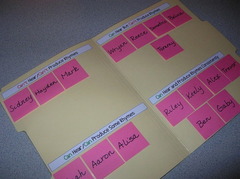
Rhyming Groups Folder Template
Track your class student rhyming progress using the "Rhyming Groups Folder". Glue the following four tabs on the inside of a manila folder, laminate, and use Post-Its to move individual students' rhyming progression.
- Can't Hear/Can't Produce Rhymes
- Can Hear/Can't Produce Rhymes
- Can Hear/Can Produce Some Rhymes
- Can Hear/Can Produce Rhymes Consistently
Learning the Difference between letters, sounds, syllables, & sentences: phonemic awareness activities
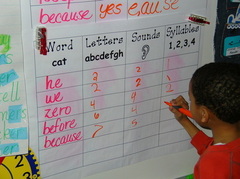
Word, Letter, Sound, & Syllable Tally
By enlarging and laminating this template your students can determine the letters, sounds, and syllables in new words you are working on in the classroom. (Kinkos is a great place to have documents enlarged). This helps children visualize that some words might have a lot of letters, but not a lot of sounds and vice versa.
Letter, Sound, Syllable, Word, & Sentence Poster Template
Cut out the cards and glue each to the top of a large poster. Provide your students/child with old magazines and newspapers. Help them cut out uppercase and lowercase letters, sounds, syllables, words, and sentences and glue of the appropriate poster. For "sounds" and "syllables" have your child use pictures of objects. Cut the objects according to the number of sounds and syllables. For example, the word "cat" would be cut into three pieces to represent the sound /k/ /a/ /t/. A great multi-sensory phonemic awareness activity.